 Ethological dynamics in diorama environments
Grant-in-Aid for Transformative Research Areas (A)
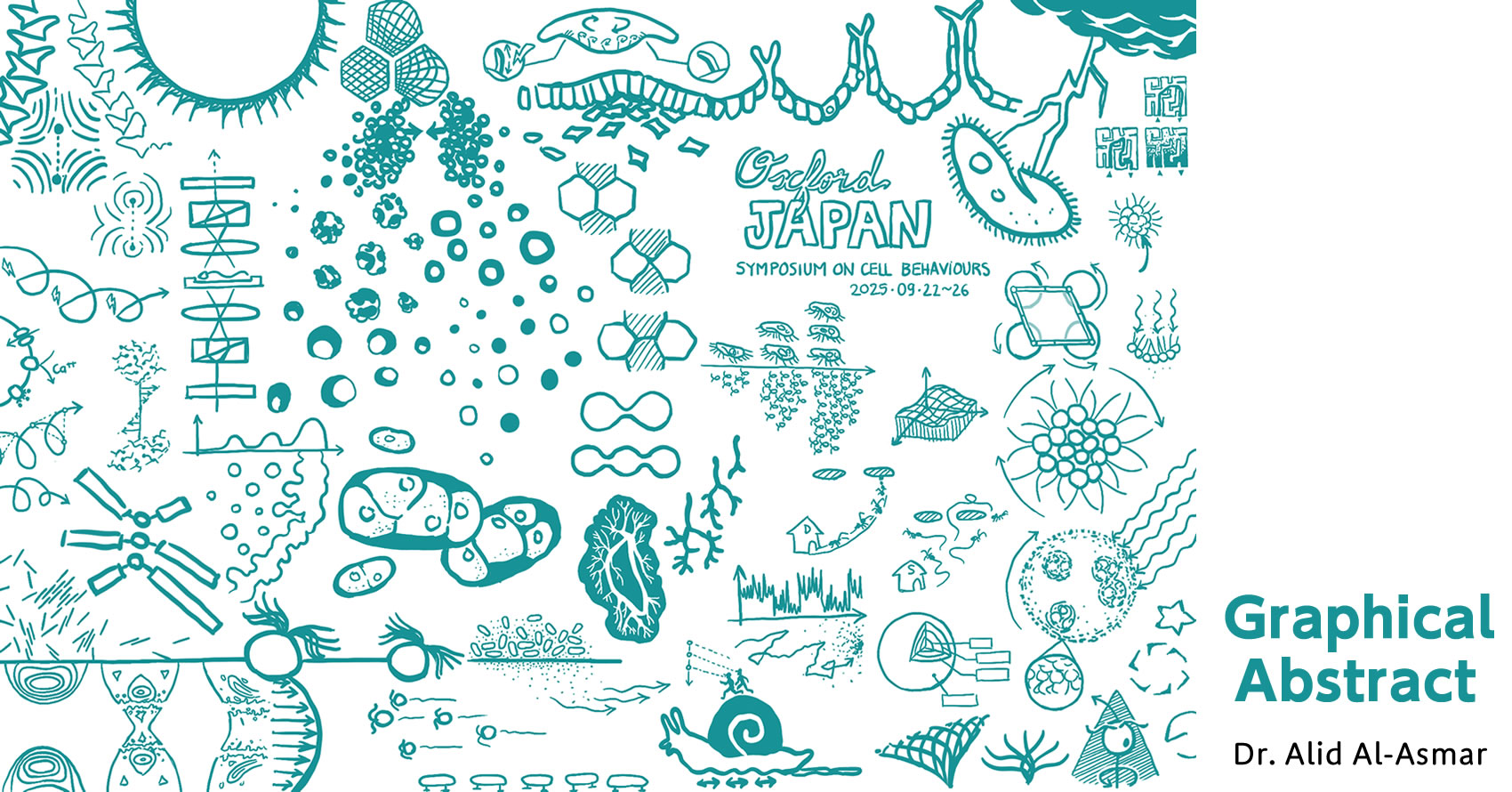
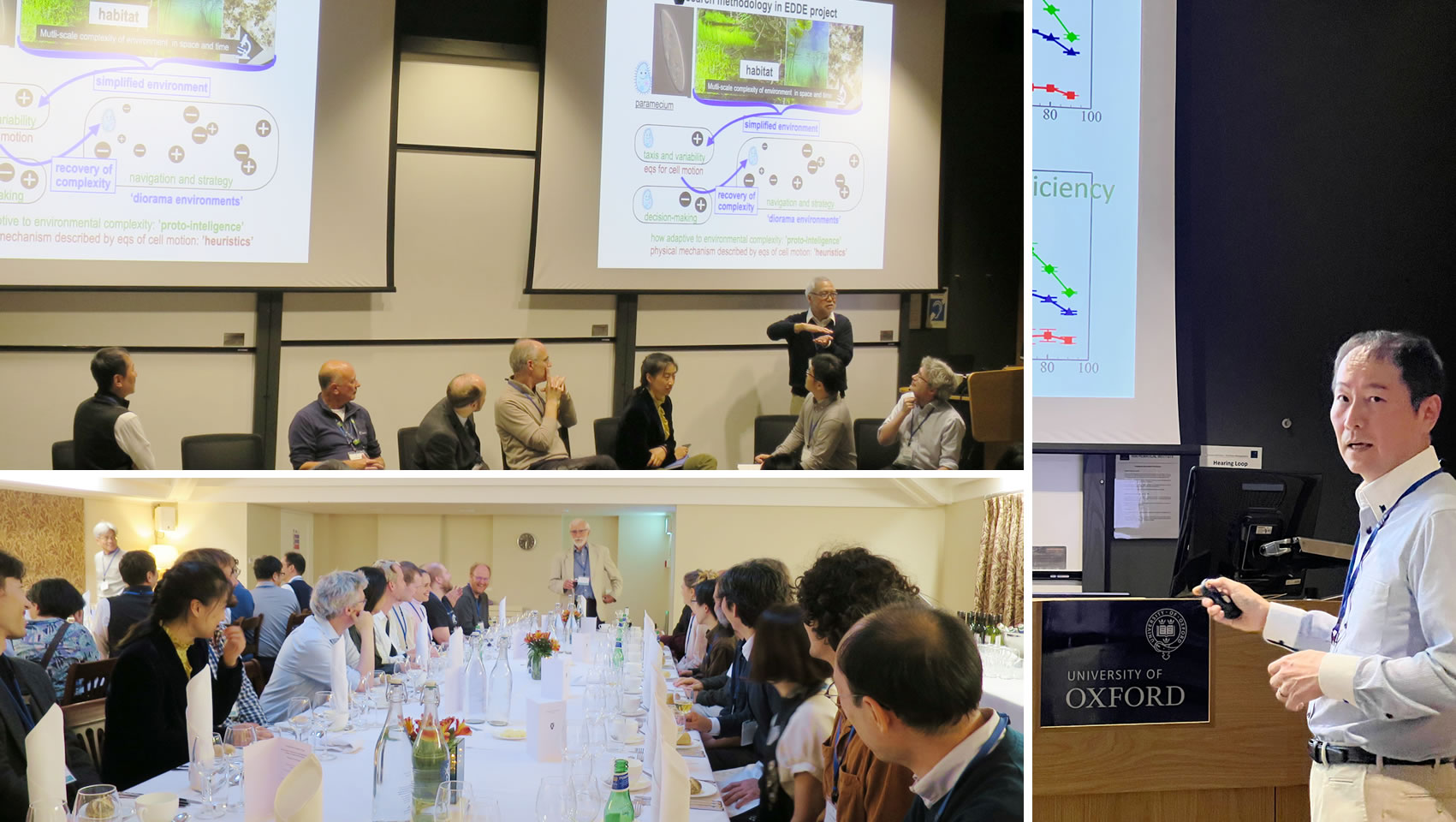
An international symposium ‘Oxford-Japan Symposium on Cell Behaviors in Simple to Complex Environments’ was held at the Mathematical Institute, University of Oxford, jointly with the Wolfson Centre for Mathematical Biology at the Mathematical Institute (22–26 September 2025) . We presented the outcomes of our research field, learned about the progress of related international research, and engaged in discussions with the relevant international research community.
Oxford-Japan Symposium 2025 Website
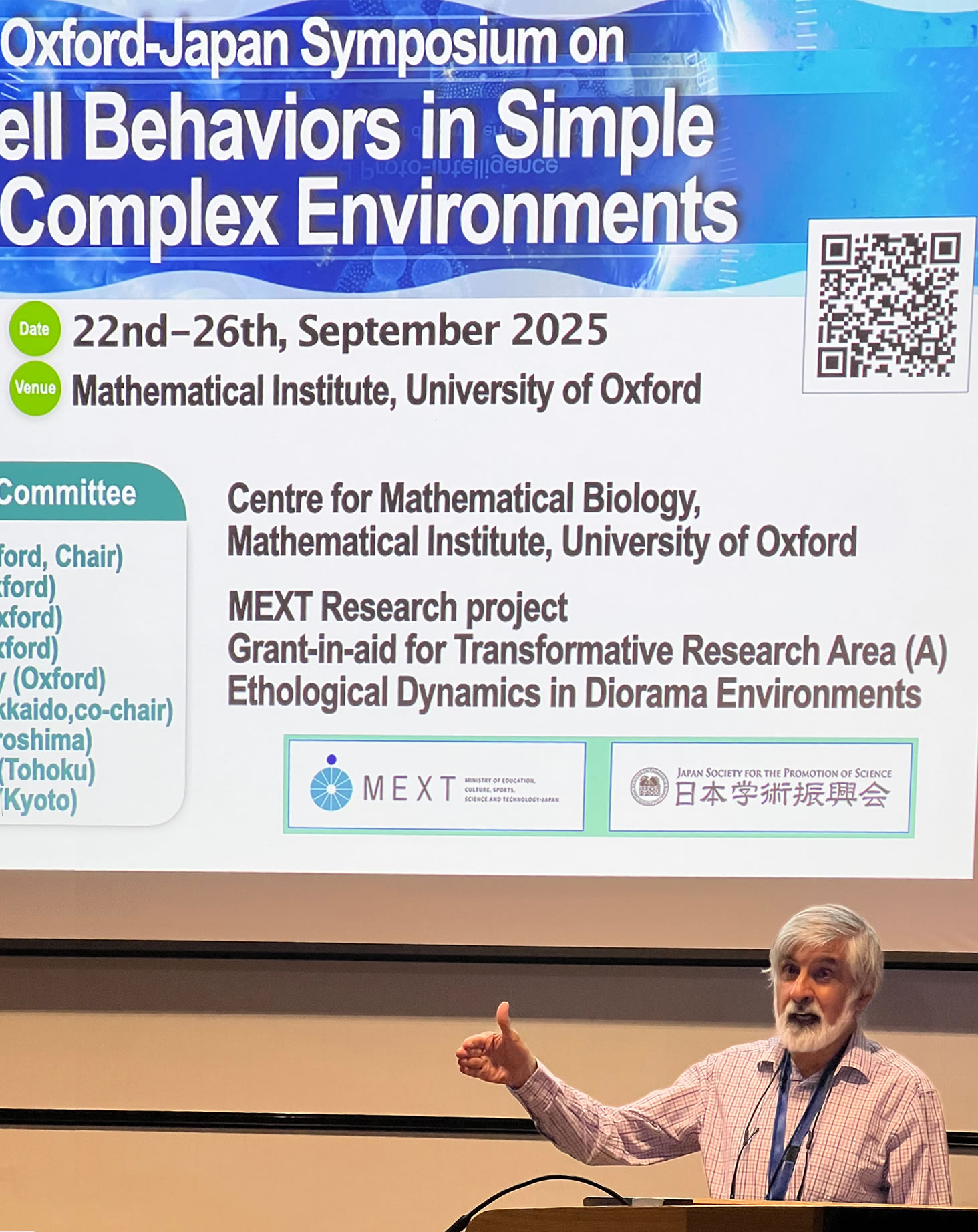
The organizing committee comprised five members from Oxford side: four from the Wolfson Centre for Mathematical Biology, Professor Philip Maini (Chair), Professor Helen Byrne, Professor Eamon Gaffney, and Professor Radeck Erban, and one from Department of Biology, Prof. Mark Fricker; and four members from our research area: Professor Toshiyuki Nakagaki (Co-Chair), Professor Takuji Ishikawa, Professor Makoto Iima, and Professor Kenta Ishimoto.
The event commenced with opening remarks by Professor P. Maini. He outlined the historical connection between the Oxford Centre for Mathematical Biology and our research area, stated the symposium's objectives, and emphasized the importance of mathematics and physics in life science research. He addressed the participants, stating that while the symposium's theme falls within the scope of mathematical biology, it also suggests new future directions, and he hoped the symposium would foster active research exchange. Next, Professor Nakagaki, the representative of this research project, provided an overview of the symposium and introduced our research project ‘Ethological Dynamics in Diorama Environments’ .
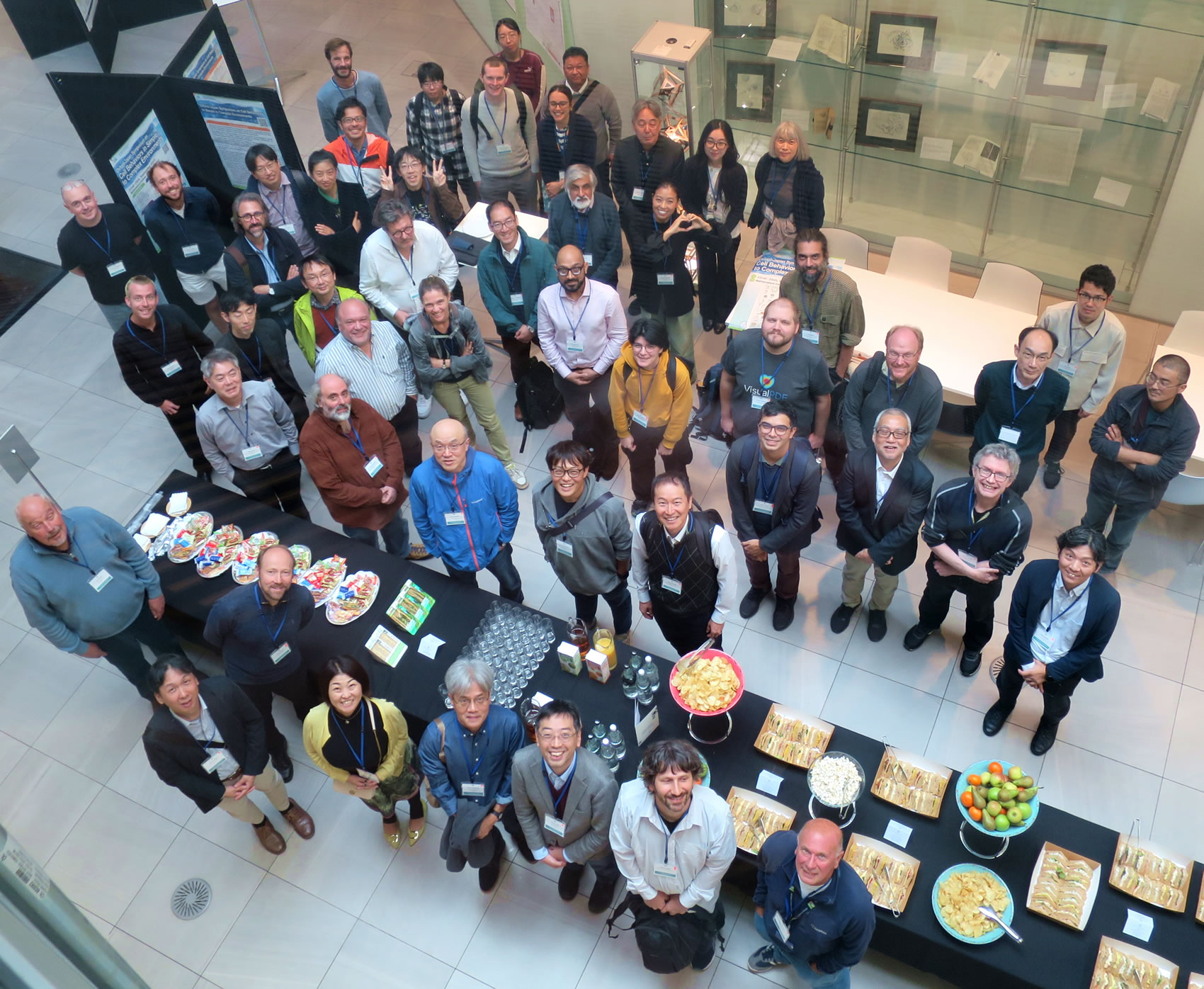
Thirty-six participants from Europe and the US, primarily the UK, and 27 participants associated with our research project attended.There were 39 oral presentations and 19 poster presentations, facilitating extremely active research exchange throughout the week.
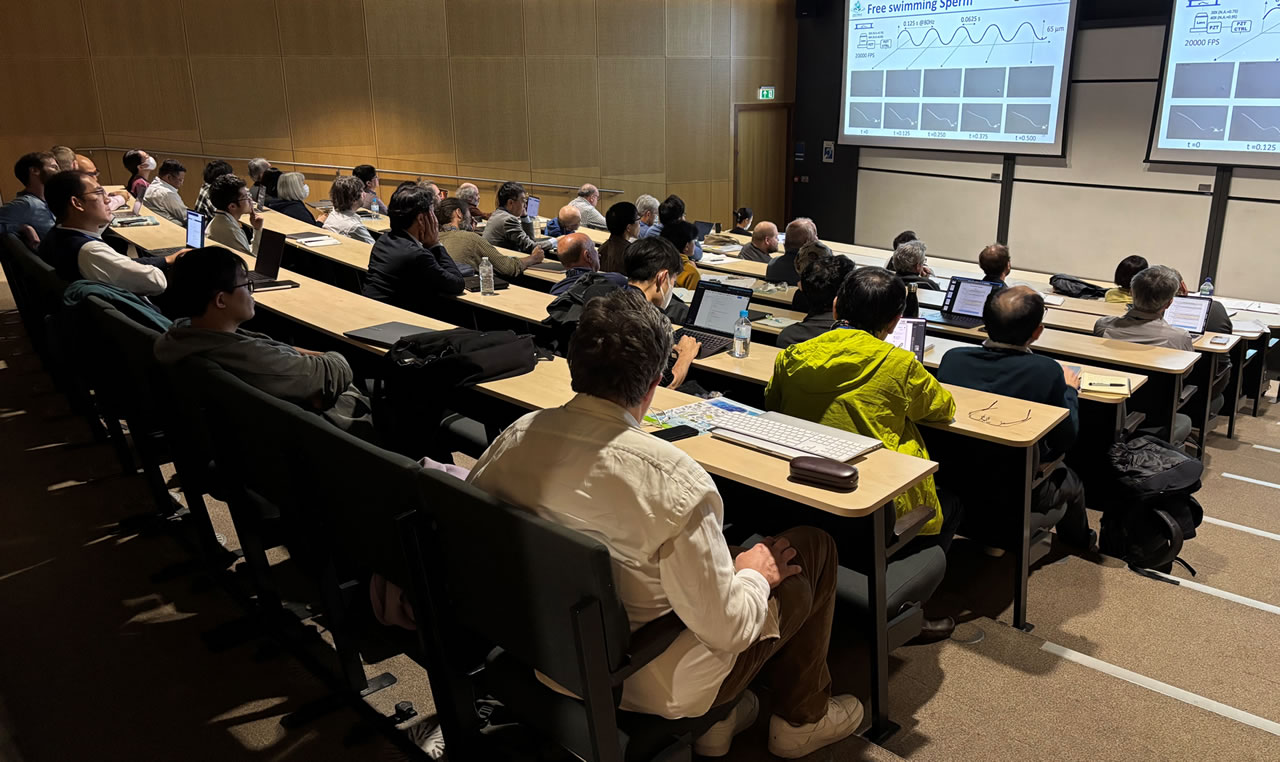
The panel discussion, ‘A Research Direction in Cell Movement in the Next Decade - Cellular Behaviors in Simple to Complex Environments -’, moderated by Professor Gaffney and Professor Ishimoto, featured six panelists engaging in debate with the audience. The panelists were Professor Raymond Goldstein, Professor Kirsty Wan, Professor Radek Erban, Professor Mark Fricker, Professor Ishikawa, and Professor Nakagaki. The conference dinner commenced at St Hugh's College, University of Oxford, with a toast by Professor Tim Pedley, Emeritus Professor at the University of Cambridge. Participants enjoyed a convivial atmosphere, deepening their scientific connections.
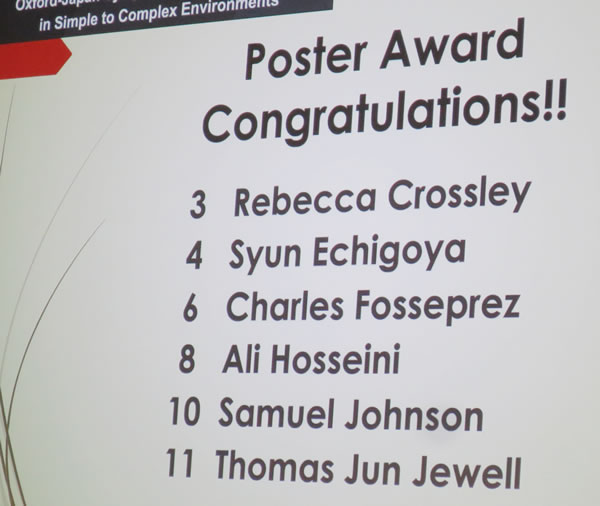
During the closing ceremony, six poster presentation awards (for early-career researchers) were presented. The recipients were: Dr. R. Crossley, Dr. S. Echigoya, Dr. C. Fosseprez, Dr. A. Hosseini, Dr. S. Johnson, and Dr. T. J. Jewell.
Professor Fricker delivered the concluding remarks. Summarizing his remarks, including individual comments from participants, the key points were as follows: ‘The theme of this symposium is biologically fundamental and highly significant.
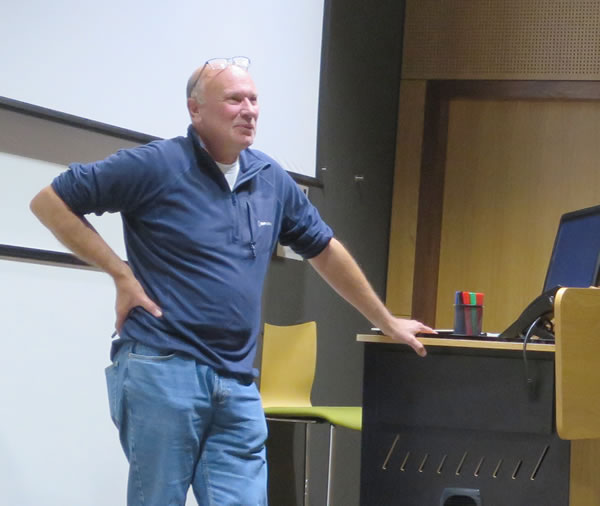
It is rare for so many researchers involved in this theme to gather in one place. This theme is interdisciplinary, requiring disciplines from field observations, laboratory behavioral experiments, analysis for molecular mechanism, mathematical modeling, and analysis for information processing algorithm. It is necessary to view these from the perspective of biological evolution. The evolutionary perspective and the behavioral ecology perspective should be emphasized more. The University of Oxford possesses a tradition in ethological research and hosts a Centre for Mathematical Biology. The University of Cambridge has a tradition in biomechanics and has led the field in the biomechanics of cell movement. Many Japanese researchers have studied at both universities. This symposium was convened against this backdrop of historical exchange. It is hoped that this symposium will serve as a catalyst for advancing research in this field together with all those present here.’
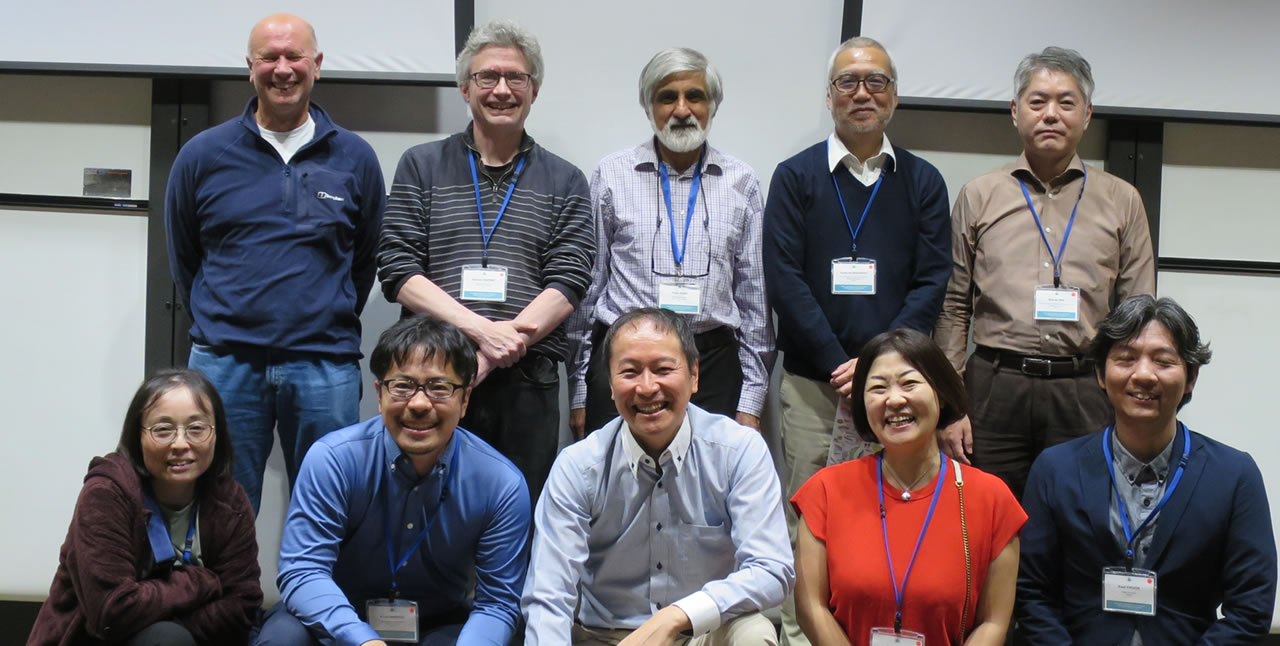
The symposium proved highly fruitful, thanks to the efforts invested over more than a year in preparation with members from both sides of Oxford and Japan. We experienced genuine scientific excitement on the final day of the symposium, and this excitement began with Professor Ishikawa's plenary lecture, intensified through Emeritus Professor Pedley's concluding lecture, and culminated in Professor Fricker's concluding remarks, which were deeply moving. This symposium was realized through the support of many persons. Professor Ruth Baker of the Wolfson Centre for Mathematical Biology provided valuable comments regarding how to organize the symposium, and also facilitated the cooperation of St. Hugh's College. Regarding administrative procedures, the event staffs of the Mathematical Institute at the University of Oxford and the administrative staffs of the Japanese side have done carefully. Dr Ogi, URA at Hokkaido University, contributed significantly to the Japan-UK coordination of the symposium. Finally, Professors Iima and Ishimoto, as the international liaison officers for our research project, played central roles in managing and organizing the entire process of this symposium.